
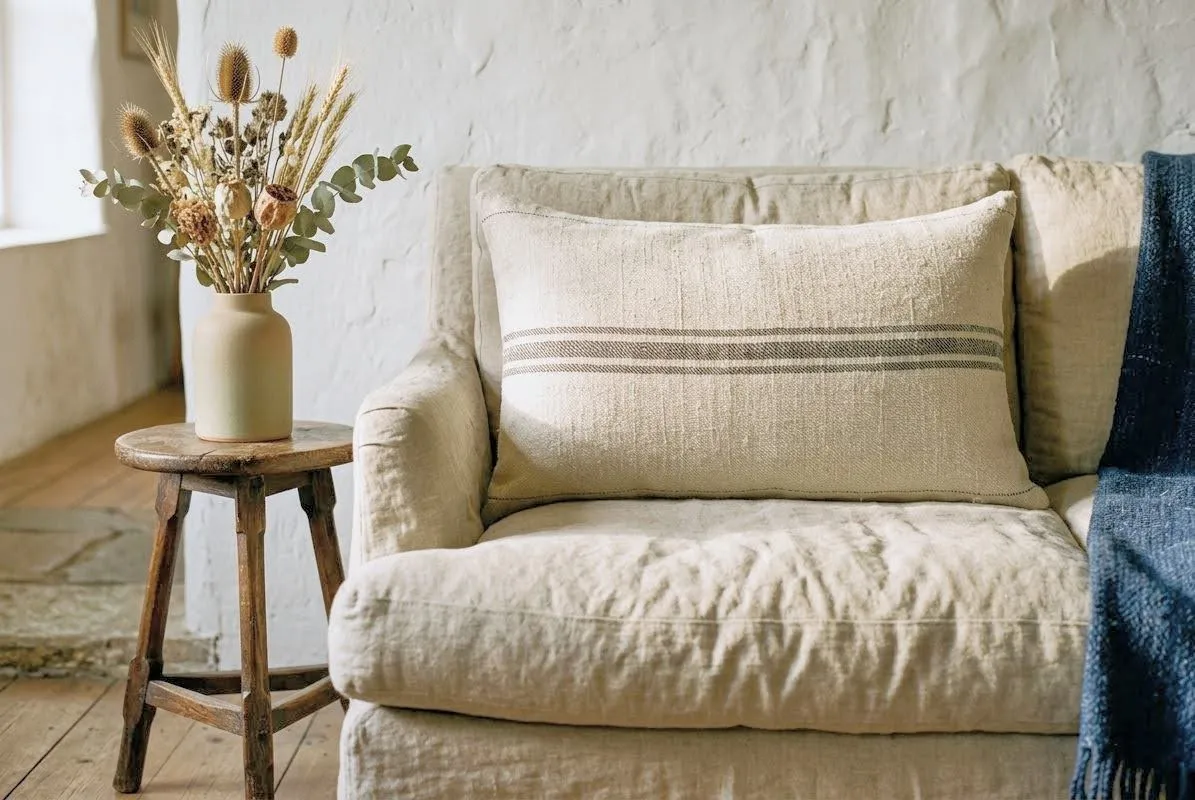
Folklectic — a term coined in Country Living‘s 2026 trend guide, blending “folk” and “eclectic” — describes interiors built around handmade, useful objects with a real history. An antique Transylvanian grain sack pillow fits the definition literally: hand-woven hemp circa 1900, made to work, impossible to reproduce. We didn’t adapt to this trend. We’ve been making exactly this since 2013.
In April 2026, Country Living magazine used a word that caught our attention: folklectic.
It’s a mix of “folk” and “eclectic.” It describes a style that loves handmade items, useful beauty and things with a real history. That same week, Better Homes & Gardens asked if we are in a new “Arts and Crafts” movement.
The answer from experts was a loud “yes.” People are tired of mass-produced, AI-generated designs. They want things made by humans. We didn’t need to change what we do to fit this trend. We’ve been making these exact objects since we found our first grain sack in an old wooden barn in deep Transylvania.
What Is “Folklectic” Decor?
The term comes from Country Living’s 2026 trend guide. It describes homes filled with old, simple things that were made to last. Think of hand-woven fabrics, old quilts, and needlework. These weren’t made to be “art” – they were made to work hard and outlast their makers.
The main idea is simple: anything made by human hands, designed to function and endure, belongs in a folklectic interior. This style loves imperfections. A “flaw” isn’t a mistake; it’s proof that a real person made the item.
Design expert Andreas Siesing, quoted in Better Homes & Gardens, says people are bored of the “perfect” look. They want “unadulterated craftsmanship”, things that feel real.
Why Grain Sack Pillows Are Perfect for This Trend
A Transylvanian hemp grain sack from circa 1900 ticks every box the trend defines.
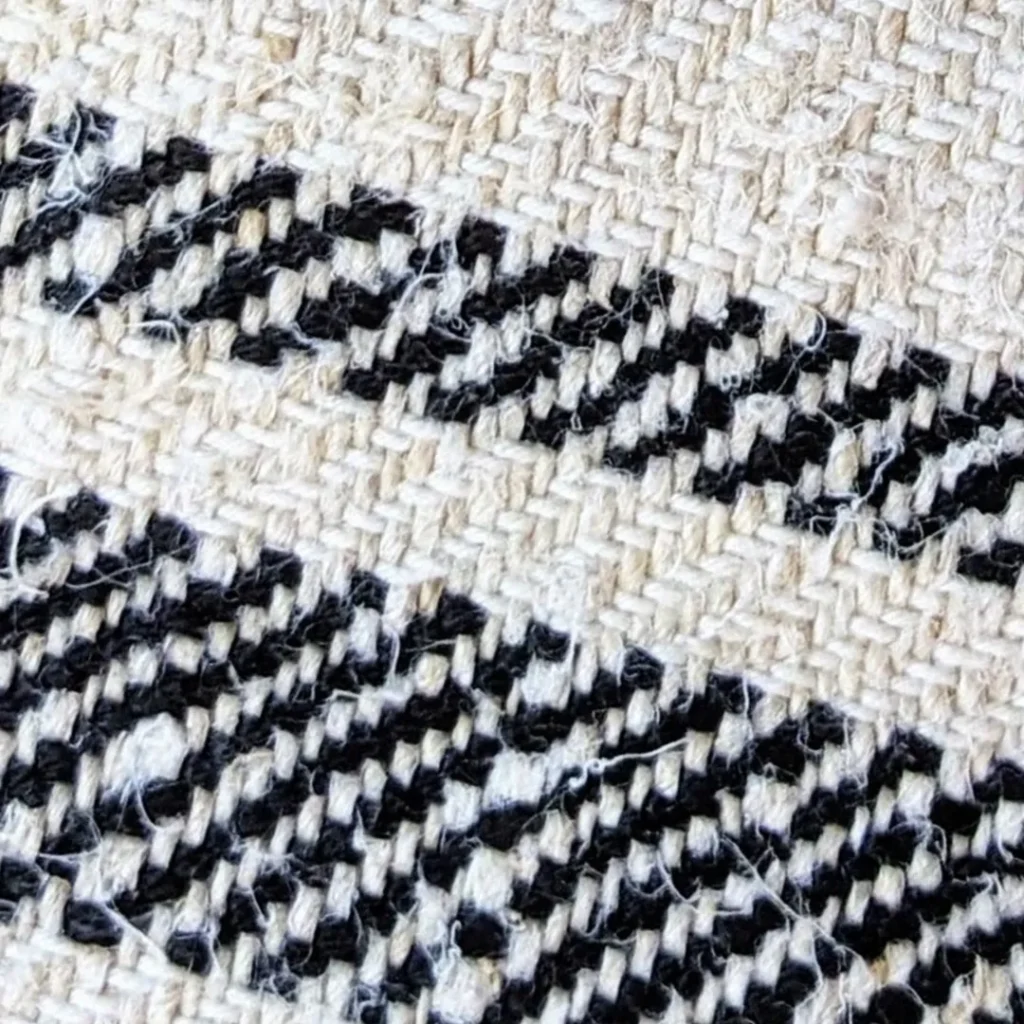
Handmade. Woven on a manual wooden loom by a farm family, not in a factory. The uneven threads, the slight irregularities in the stripe, the visible hand-stitching at the seam: these are not production defects. They are the fingerprints of the maker.
Useful. Grain sacks were working objects. They transported the harvest. They were repaired, reused, passed between generations. A grain sack was never designed to be decorative. It became decorative by surviving.
One-of-a-Kind. A grain sack woven in Transylvania in 1900 cannot be reproduced. The specific hemp variety, the specific loom, the specific hands that made it no longer exist. When you hold one of our grain sack cushion covers, you hold the only surviving version of that particular object. Not a reproduction. Not an “inspired by” version. The original.
Honest. The folklectic aesthetic celebrates exactly this: objects that were never meant to be decorative and became beautiful precisely because they weren’t trying to be. Our grain sack pillow covers are beautiful because they are real and imperfect.
Folklectic Before It Had a Name
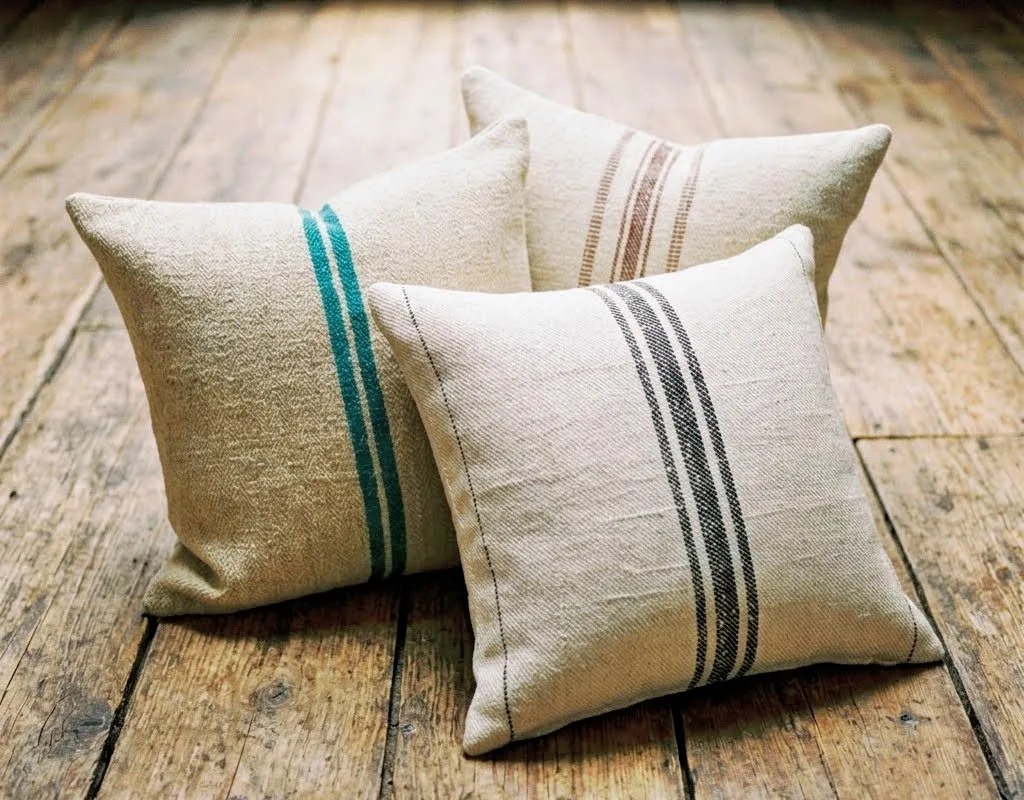
Hand-woven circa 1900 · burn-test verified hemp · documented Transylvanian provenance. One of a kind — when a piece is gone, it cannot be remade.
ONE OF A KIND · from €75
Country Style is a Feeling, Not a Look
In a companion article published the same week, Country Living redefined country style itself for 2026, consulting 100 top designers. They agreed it’s not about a specific look, it’s about a feeling.
Designer Grace Mitchell described it as “a freedom to express yourself in your home at its finest: nothing is too precious, sit on this very comfortable sofa, take a book.” Designer Meta Coleman added that the best country interiors have “a relaxed feeling without being too put together. Nothing is perfect and it’s not meant to be.” A grain sack pillow on a rumpled linen sofa is not a styling decision. It is a statement about how you live.
The devotion to handmade was the most consistent theme across all 100 designers surveyed. Dara Caponigro, creative director of Schumacher, stated: “The future is all about handcraft: an antidote to the technological overload we’re all experiencing.” Weaver Emily Ridings went further: “Handmade pieces will become more valued than ever. They stand as a quiet rebellion against the culture of convenience, offering longevity, uniqueness and meaning.”
This is Medreana in three words: longevity, uniqueness, meaning.
The Arts & Crafts Revival – A Hunger for the Human Touch
Better Homes & Gardens published a third piece the same week: “Are We in a Modern-Day Arts and Crafts Movement?” The original Arts and Crafts movement started because people hated factory-made goods. Today, people are reacting the same way to AI and mass production. They want proof that a person was involved.
An antique Transylvanian grain sack from 1900 predates both revolutions. It was made before industrialization reached rural Transylvania, before synthetic fibers, before anything resembling a supply chain. It belongs to neither protest: because it was never part of the problem. It simply survived.
A grain sack pillow cover made from this fabric carries that history into your home. Not as nostalgia. As fact.
How to Use Grain Sack Pillows in Your Home
You don’t need to redecorate your entire home. Just one real, old piece can change the whole room.
On the sofa: A grain sack pillow cover on a linen sofa, paired with an oak side table and a stack of old books.
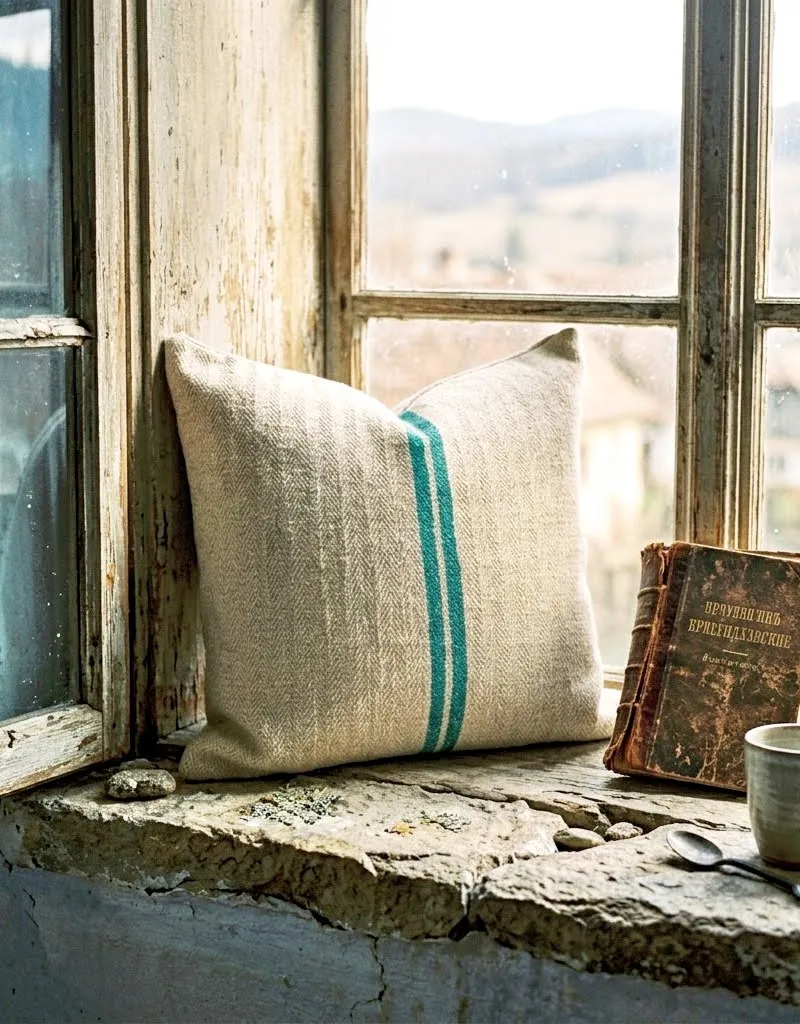
In the bedroom: A cushion cover in indigo stripe on a bedroom chair with unplastered stone walls and a worn wool blanket behind it. A grain sack pillow against a white plaster wall with a single ceramic vase and nothing else.
In the kitchen: Flagstone floors, dried herbs hung from a beam and one cushion on a wooden bench by the window.
The grain sack doesn’t try to match anything. It looks good because it is authentic.
For more styling ideas, see 9 Interiors, One Textile → And if you’re new to these textiles entirely, our complete guide covers their history, types and care.
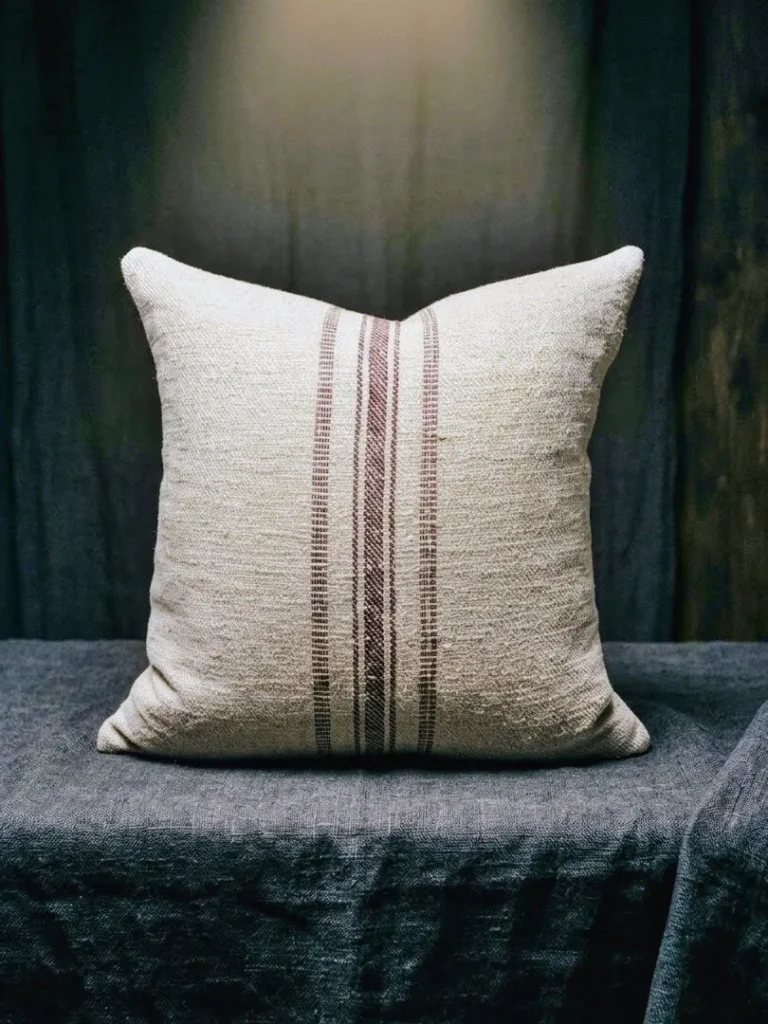
Find Your Piece
The current Medreana collection is available on Etsy. Each grain sack pillow cover is listed individually, photographed to show its exact texture, markings and condition, and documented: origin, period, fiber verified by burn test. (Curious what separates an original from a reproduction? Our buyer’s guide covers every authentication check.) Once a piece sells, it is gone. There is no restock, no reproduction, no “inspired by” version.
If you want to know how to care for your piece once it arrives, read our Care Guide →
If you’re building a folklectic interior or simply a home that feels real and lasts for years – browse the current collection here →
Medreana · Handcrafted in Transylvania · Est. 2013 · Star Seller · 305+ Five-Star Reviews
Sources: Country Living, “The Folklectic Trend Guide,” April 2026 · Country Living, “Country Style 2026,” April 2026 · Better Homes & Gardens, “Are We in a Modern-Day Arts and Crafts Movement?,” April 2026