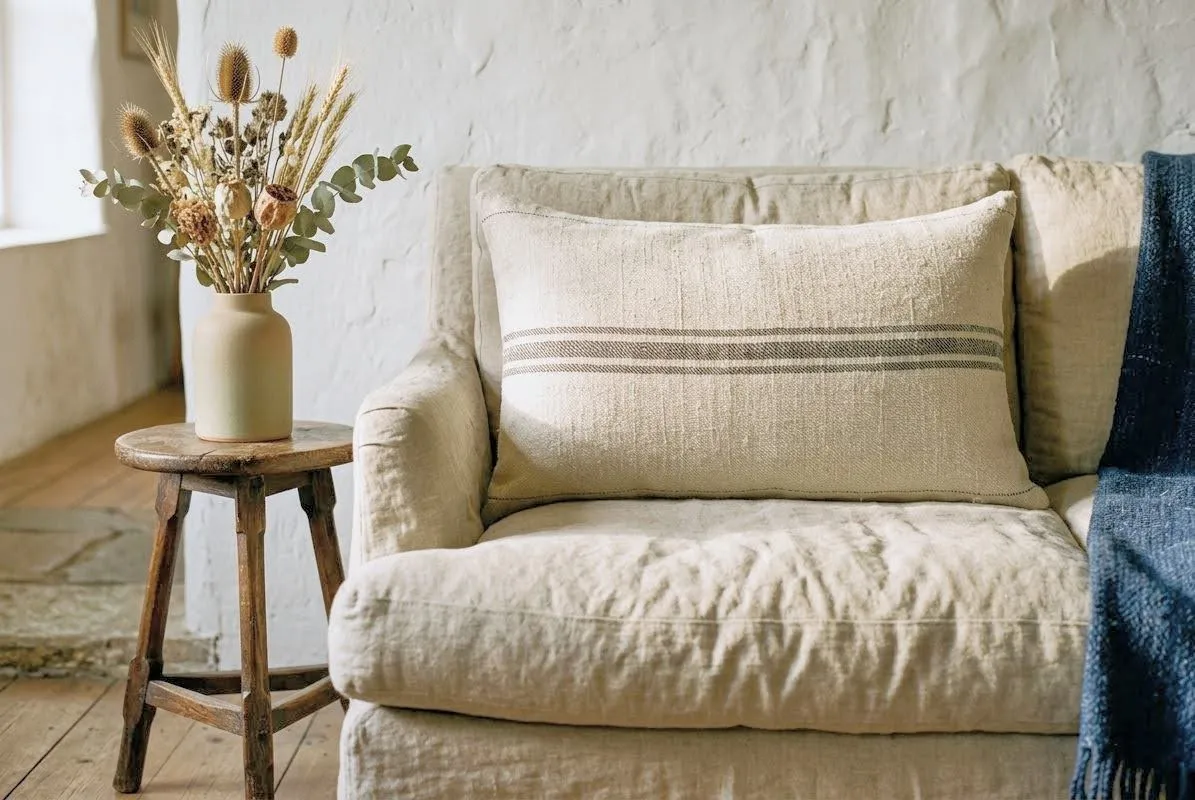
Your grain sack cushion insert should be about 2 cm (roughly 1 inch) larger than the cover on each side. A 40×40 cm (16×16 in) cover takes a 45×45 cm insert; 45×45 cm and 48×48 cm (18–19 in) covers both take a 50×50 cm (20×20 in) insert. The same rule applies to lumbar covers: always size the insert up by about 2 cm per side. A slightly larger insert fills the corners, keeps the antique hemp taut, and gives the cushion the full, structured shape it was woven to hold.
Why the insert should always be larger than the cover
An insert that matches the cover exactly will always look underfilled. Fabric relaxes, filling settles, and within weeks the corners collapse into soft, empty points — what upholsterers call “dog ears.” Sizing up by 2 cm per side pushes the filling into the corners and keeps the face of the cushion smooth and plump.
With antique hemp, this matters even more than with modern fabric. Our covers are sewn from grain sacks hand-woven in Transylvania circa 1900 — 100% hemp in a dense 4-shaft twill, verified by burn test. A full antique grain sack, roughly 50×120 cm, weighs between 500 g and 1 kg. A cushion cover sewn from it is naturally lighter, but still noticeably denser and heavier than any reproduction of the same size. That density is a gift: the fabric doesn’t stretch or sag like thin cotton. But it also means the cover won’t “cheat” for you — it holds exactly the shape the insert gives it. A generous insert lets the twill sit taut, the way this cloth was always meant to work.
The sizing table: cover → insert
Every square cover in our collections pairs with one of two insert sizes. If you shop in Germany or Austria, the third column gives you the exact search term — Kissenbezug sizing always refers to the insert, not the cover.
| Cover size | Insert to buy | German search term |
|---|---|---|
| 40×40 cm (16×16 in) | 45×45 cm | Kissenbezug 45×45 |
| 45×45 cm (18×18 in) | 50×50 cm (20×20 in) | Kissenbezug 50×50 |
| 48×48 cm (19×19 in) | 50×50 cm (20×20 in) | Kissenbezug 50×50 |
Lumbar covers: the same rule, different proportions
Lumbar sizes vary piece by piece, because each cover follows the cloth the original sack allows — one of a kind means the fabric decides, not a factory pattern. Whatever the dimensions of your cover, apply the same +2 cm rule to both directions.
| Lumbar cover | Insert to look for |
|---|---|
| 60×40 cm (24×16 in) | ~62×42 cm — or a snug 60×40 feather insert, generously filled |
| 65×48 cm (26×19 in) | ~67×50 cm |
| 75×48 cm (30×19 in) | ~77×50 cm |
| 90×49 cm (36×19 in) | ~92×51 cm |
If the exact size doesn’t exist where you shop, choose the next size up rather than down — a firm lumbar reads intentional; a loose one reads forgotten.
Feather, down, or synthetic?
Feather and feather-down inserts suit antique hemp best. They’re heavy enough to match the weight of the cloth, they mould when you lean into them, and they take the classic “karate chop” at the top of a lumbar. A good synthetic insert works too — choose one described as overfilled or plump — but avoid flat, budget polyester pads: inside a century-old twill, a thin insert looks like an apology.
Rescued, Not Reproduced
Every Medreana cover is sewn from an antique Transylvanian grain sack — hand-woven circa 1900, 100% hemp, verified by burn test. One of a kind, never restocked. Covers from €75; find the size that fits your sofa before the piece finds another home.
Which cover size for which spot?
Sizing isn’t only about the insert — it’s about where the cushion lives. A few placements we see again and again in our customers’ homes:
40×40 cm (16×16 in) — armchairs, bedroom layering, smaller sofas. The most versatile size, and the gentlest way to bring a piece from the Heritage Collection into a room.
45×45 and 48×48 cm (18–19 in) — standard sofas and reading corners. Large enough to show the stripe properly; this is where the documented river-valley pieces of the Valley Collection do their best work.
Lumbar, 60–90 cm wide — benches, bed ends, and the front row of a deep sofa. The long format carries a bold stripe beautifully, which is why the wide red bands of the Szekely Collection and the gradients of The Dyed Collection are so often chosen in lumbar form.
For room-by-room ideas, our styling guide walks one textile through nine different interiors — from wabi-sabi to what the trend pages now call folklectic.
Three small details that make the fit perfect
Check the closure before you force an insert in. Most of our covers close with a concealed zipper; pieces from the Textile Art Collection close with a traditional hand-sewn envelope — ease the insert in gently, folded in half, rather than pushing corner-first.
Shake and chop. Once the insert is in, hold the cover by two corners and shake the filling downward, then plump it back up. Feather inserts take a soft chop along the top edge; the cushion instantly looks styled rather than stuffed.
Remove the insert before any cleaning. Antique hemp is washed on its own, gently — the full instructions are in our Care Guide.
A note on why sizes vary at all
Mass-produced cushion covers come in identical sizes because the fabric comes off an identical roll. Ours don’t, and can’t. Each cover is cut from a single antique sack, and the sack decides how much cloth there is — where the stripe falls, where a hand-stitched repair sits, how the selvedge runs. That is the difference between reproduction and rescue, and it’s the same reason no two of our pieces are alike. If you’re new to antique grain sacks, start with the complete guide, and learn to tell the real thing from a copy in the buyer’s guide. Quick answers live in our FAQ.
The cloth was made once, by hand, over a century ago. The right insert simply lets it stand the way it deserves.